
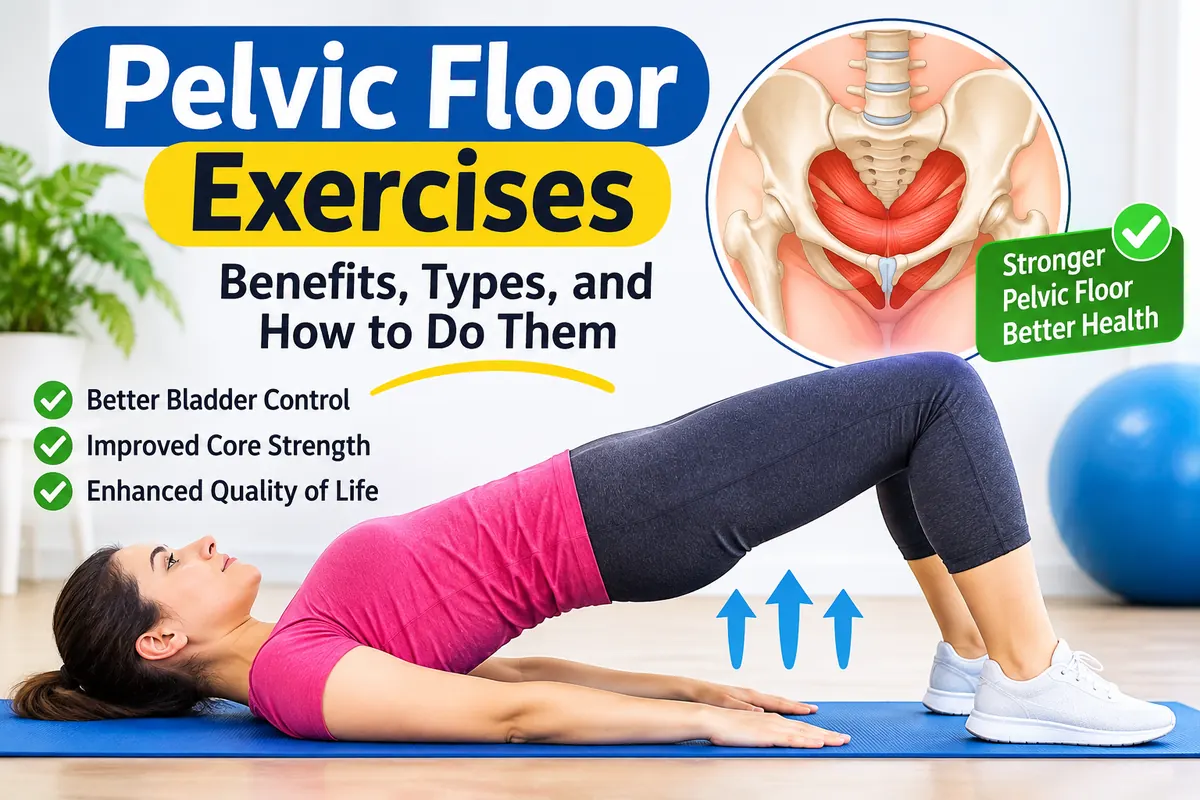
Pelvic Floor Exercises: Benefits, Types, and How to Do Them
Pelvic floor exercises is an important way to improve our pelvic health. Pelvic floor muscles are those muscles which support our bladder, bowel and pelvic organs. These muscles also help to control our urine and bowel movements. But many people do not focus on these muscles while they do not face the problems like urine leakage and pelvic discomfort.
The good thing is that by doing pelvic exercise with the right method we can help to strengthen our pelvic muscles. These exercises are also called Kegel. You can also do this exercise at home without any special equipment. In this article we know about the right technique of this exercise, benefits and important tips for beginners.
What are Pelvic Floor Exercises?
Pelvic floor exercise is an exercise which helps to strengthen your muscles under the pelvis and to improve your control. These muscles create a supported layer which supports pelvic muscles in their place. Pelvic muscles work all day whether we feel it or not. For example it helps to control urine and stool. As it is they support in daily routine work. But every person does not need to strengthen their pelvic muscles. Some people’s muscles are already tight and it feels hard to relax them. In this situation instead of doing just strengthening exercise to relax muscles and take professional guidance can be more helpful.
Benefits of Pelvic Floor Exercises
-
Pelvic Floor Exercises May Improve Bladder Control
The one benefit of pelvic exercise is to make better bladder control. This exercise can lessen the urine leakage in some people specially when urine leakage during cough, exercise, laughing and screaming. This problem is called stress urinary incontinence. In this pelvic floor muscles do not control urine correctly. But results can be different in each person and these exercises are not a cure of every reason for urine leakage.
-
Pelvic Floor Exercises can Support Bowel Control
Pelvic floor exercise also played an important role to support bowel control. When these muscles work correctly it can help to control stool and gas. In some people pelvic floor exercise can help to lessen the bowel leakage. But if you have bowel control issues regularly, suggest to a healthcare professional that you know the right reason.
-
Pelvic Floor Exercises May Support After Child Birth
Pregnancy and child birth can affect pelvic floor muscles. That’s why some people face the problem of urine leakage and muscle weakness after delivery. Pelvic exercises can help in recovery after delivery if this exercise is suitable for that person. But the recovery of every person is changed. If you have more pain, pressure or any other complication so suggest a healthcare professional before starting exercise.
-
Pelvic Floor Exercises May Improve Muscles Awareness
Another benefit of pelvic floor exercises is that they help you understand these muscles and control them better. When you understand how to contract and relax the muscles the right way, you feel better at pelvic floor exercise. Apart from this the coordination of muscles is very important. Pelvic floor muscles should not only be tightened but also relaxed when needed. Therefore, while exercising, you should focus on proper control instead of just squeezing the muscles hard.
How to Perform Them Correctly
Before starting pelvic floor exercise it is important to know the right technique. The steps given below help you to understand the basic movements.
First of all, lay down in a comfortable position. For example, lie on your back and bend your knees. Relax your thighs, stomach and buttocks and take normal breath.
After that, slowly tighten the muscles which you use to stop gas. For example, gently imagine lifting the muscles around your vagina or anus inward and upward. At the same time, try to use only your pelvic floor muscles without putting extra pressure on your whole body.
If you don’t feel pain during exercise, tighten the muscles for almost three seconds. Then relax them for a minimum of three seconds. Normal your breath during exercise.
Do some reputations in start and when control is better so increase the reputations. No need to force yourself and hold breath. If you don’t know about the right muscles so take help from a pelvic health physiotherapist.
Remember while doing urine don’t do exercise to stop again and again. As a result, this may make it difficult to empty your bladder properly. Therefore, do not use this method as a regular exercise.
How Often Should You Do Pelvic Floor Exercises
In pelvic floor exercise instead of doing so much reputations regular practice is more important. Beginners should start some light contractions or relaxations daily if exercise feels comfortable.
When control is better on muscles so a healthcare professional can suggest a more suitable routine. But the frequency of exercise depends on whether the muscles are weak, tight or their coordination is not fine.
Some people feel better in some weeks but some people can take months. Results are not obtained immediately and the pelvic can’t fix every problem.
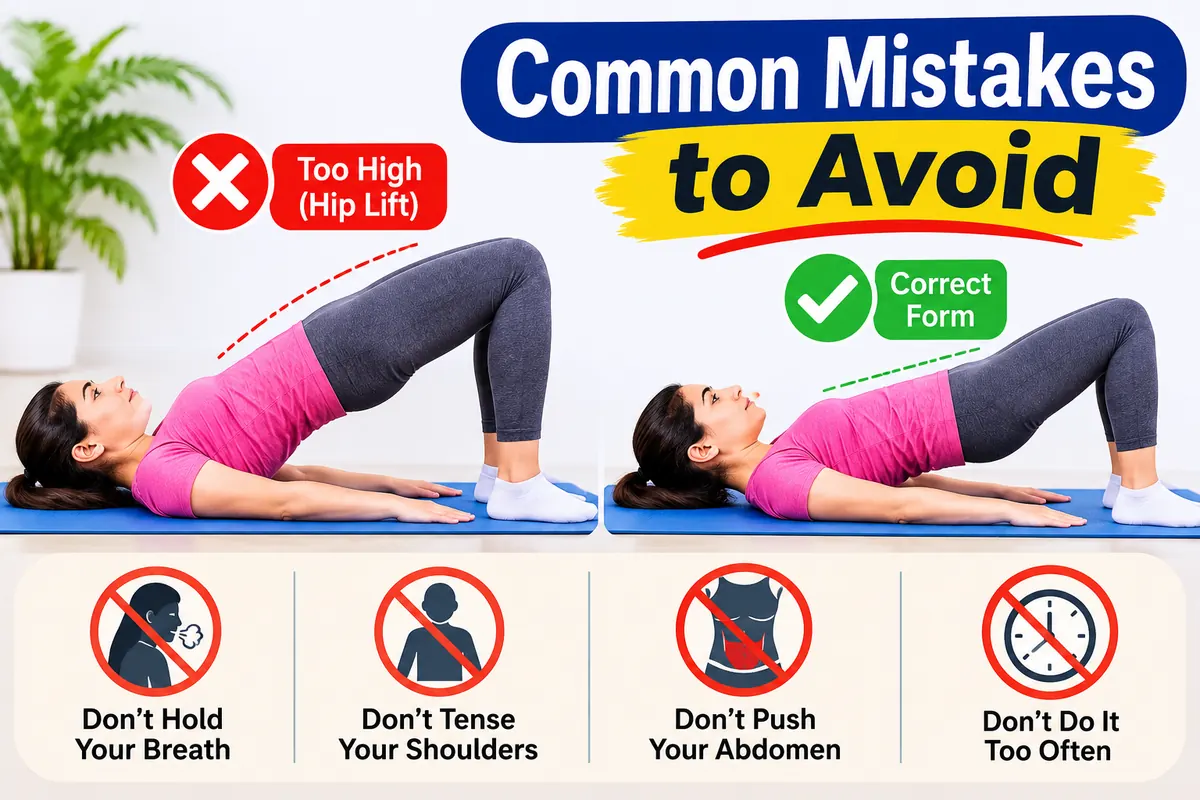
Common Mistakes to Avoid
A common mistake during pelvic floor exercise is to tighten the stomach, thighs and buttocks. While real focus should be on pelvic floor exercise. As it is, stopping breathing during exercise is not fine.
Some people squeeze their muscles too hard or repeat the exercise without relaxing them. As a result, this can cause discomfort or make symptoms worse in people whose muscles are already tight.
Therefore, focus on gently tightening the muscles, breathing normally, and fully relaxing them after each repetition. If you feel pain or your symptoms get worse, stop the exercise.
Who Should Be Careful With Pelvic Floor Exercises?
Pelvic floor exercise is not equally suitable for every person. Those people feel pelvic pain, pain during urine, difficulty during empty bowel or bladder or feel continuous tightness in pelvic they need professional assessment before starting strengthening exercises.
Suggest to a qualified healthcare professional if you feel urine leakage, bowel problems and heaviness or pressure continuously. Pelvic health physiotherapists can suggest suitable exercise after checking the strength and relaxation of muscles.
Stop doing exercise if you feel discomfort or unusual pain during exercise. If symptoms do not end, seek professional advice.
Conclusion
Pelvic floor exercise would be a suitable way to take care of pelvic health. With correct technique this exercise can help in bladder control, bowel control and better on pelvic floor muscles. But it is not important for every person to strengthen their muscles. It is just as important to relax pelvic floor muscles at the time. That is why slowly start exercising, breathing normally and if you don’t understand the correct technique, get professional guidance. Pelvic floor training would be a part of your overall health and wellness routine with the correct approach.
Maintaining good posture is an important part of overall physical health. You can also learn more in our guide on how to improve your posture.
For more information about proper technique and the benefits of pelvic floor exercises, read the NHS guide on how to help a weak bladder.